


Mitcham Who's Who
YOUR COMMUNITY. YOUR CONNECTIONS.
Meet the people behind the place.
Discover the people, businesses and groups who call Mitcham home, and meet members across Australia.
Each Portrait connects you with the public introduction and links that member has chosen to share.
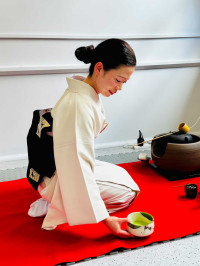
Eriko Takefuji
I am the owner of TAKEFUJI, an online boutique specialising in traditional Japanese crafts, and the co-founder and designer of TAKEFUJI LAWLER, a land…
View Public ProfilePART OF THE WIDER NETWORK
Meet members across Australia
Discover members from other towns, cities and regions.


Distinguished and Famous people from Mitcham
🌿 Peter Waite
Peter Waite’s Urrbrae home became the centre of an unusually lasting gift to South Australian research and public life. In 1913 he announced that the property would go to the University of Adelaide, with land intended for agricultural science and a public park. Further adjoining purchases enlarged that legacy. The combination of working research, historic house, gardens and conserved woodland developed from those decisions. His Mitcham-area connection therefore remains visible in an active landscape, where education and environmental care continue alongside the traces of a substantial nineteenth-century pastoral household.
📚 Robert Barr Smith
Robert Barr Smith lived at Torrens Park, the estate now associated with Scotch College. His business success supported wide charitable and cultural interests, including major gifts for university library books. Between 1892 and 1911 those library donations totalled nine thousand pounds, and the institution adopted his name in recognition. The local estate included gardens and staff accommodation as well as the main house. Its surviving places connect a wealthy household with the wider educational world his philanthropy helped strengthen, giving Mitcham a residential chapter in an important South Australian public legacy.
🔬 Jake Robinson
Hawthorndene scientist Jake Robinson received the 2026 Pelzer Prize for his environmental stewardship and public communication. His work as a microbial ecologist has extended into books and digital media, encouraging people to notice relationships between urban nature and living systems. Titles include Invisible Friends and The Nature of Pandemics. Council’s profile describes how a research notebook full of conversations with scientists helped prompt his move into writing. His contribution combines research with explaining complex subjects to wider audiences, adding a contemporary scientific voice to the district’s established educational and environmental traditions.
